Spey and Dee flies demand a unique type of feather to create their swept back profiles and flowing movement in swift water. Initially “Spey Cock” feathers from special roosters of the Spey River Valley in Scotland from which both fly and chicken derived their name, provided ideal feathers to tie Spey and Dee flies. But the already obscure Spey Cock stock dwindled into oblivion in the early 20th century, or at least their numbers became insufficient to perpetuate this specific line of fowl. Furthermore, the use of feathers from various European and Asian heron species came into vogue in Spey, Dee and other salmon flies, de-emphasizing the use of Spey Cock feathers which also contributed to their demise.
With the advent of legal protection of heron species, especially in North America, the search for suitable substitutes for heron feathers led to a number of other species and types of feathers being tried. Particular heron substitutes have included rooster schlappen and coque feathers, Ring-Necked Pheasant and Blue Eared Pheasant “rump” saddle feathers, bleached goose shoulder and various duck flank feathers. All these substitues have been used with varying success and are in themselves a testament to the ingenuity and creativity of Spey fly tiers. But what worked best; Spey Cock and Heron, was what was actually sought, not the substitute.
Instigating a number of genetic avenues, development proceeded towards a “genetic” Spey Hackle, which then became available after about 5 years of initial selection work. Feather characteristics sought included long, substantial barbs, absence of any webbing between the barbs, non brittleness of the entire feather and excellent density for good value. In addition to a pure white, which is deal for dying, an array of other color and pattern genes were incorporated into this “genetic” Spey hackle stock. Thus new and unusual feather colors and patterns would be available to encourage the inherent creativity of fly tiers. A wide range of feather sizes will also be available from these “genetic” Spey hackle chicken, thus allowing an even wider range of fly sizes to be tied.
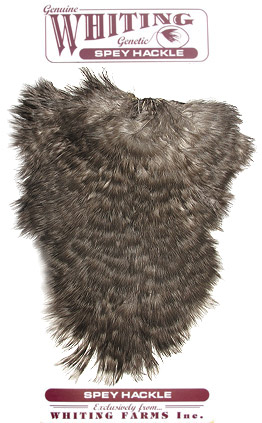 Grizzly/Heron
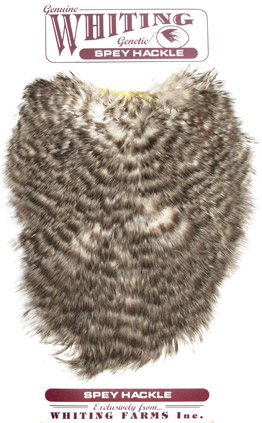 Grizzly
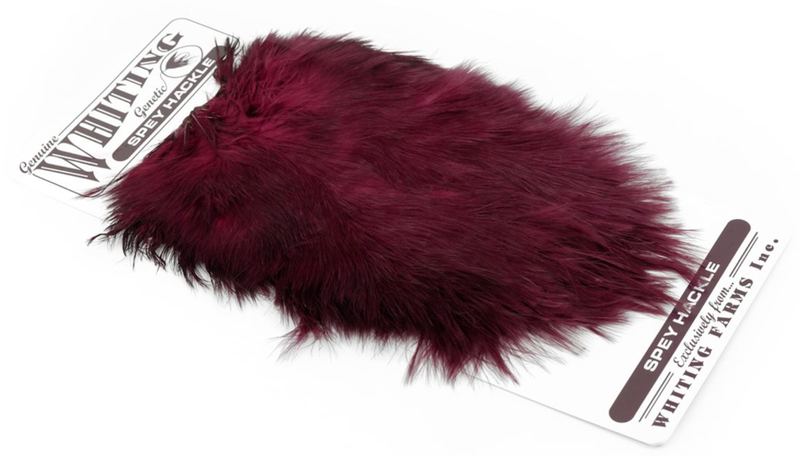 Claret
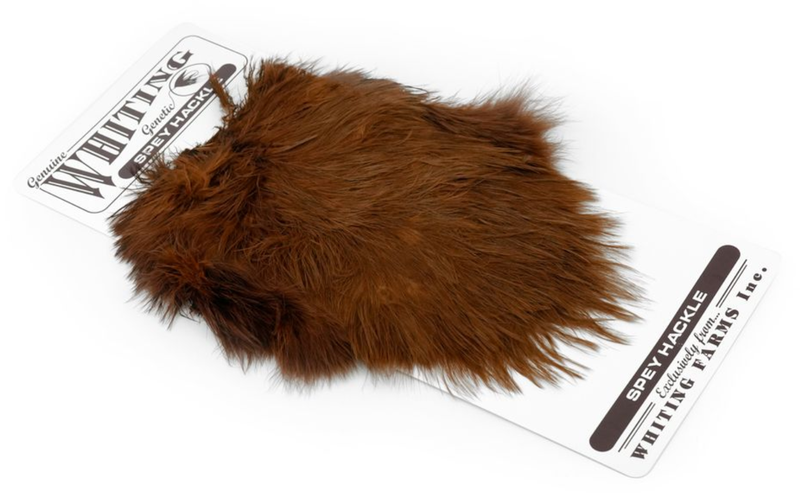 Brown
Brown
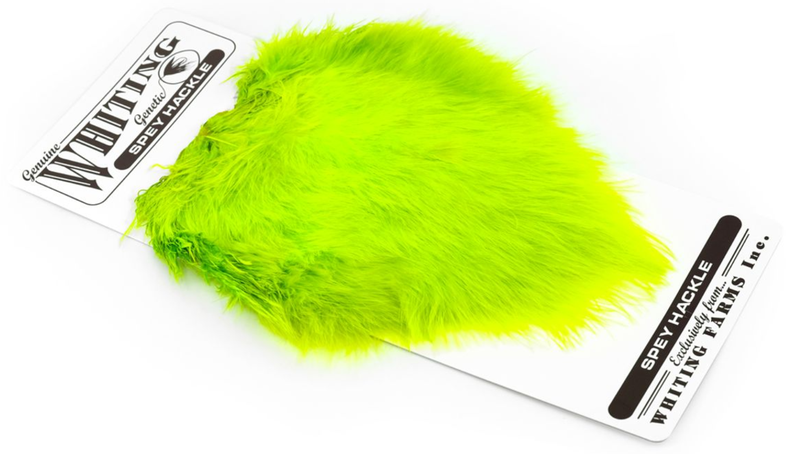 Fl. Yellow Chartreuse
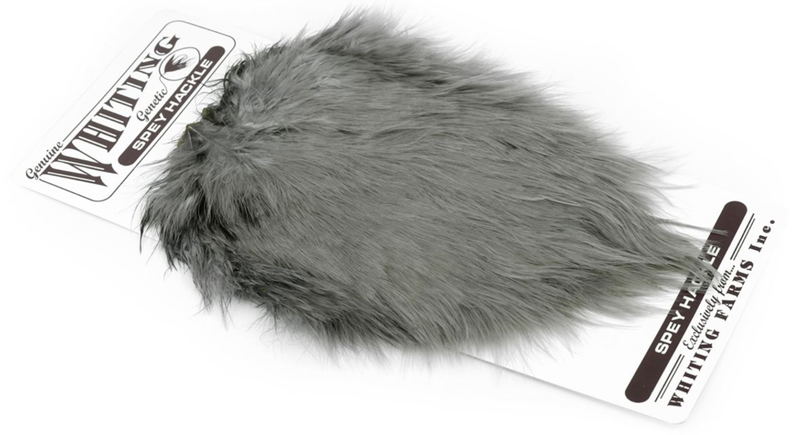 White dyed Medium Dun
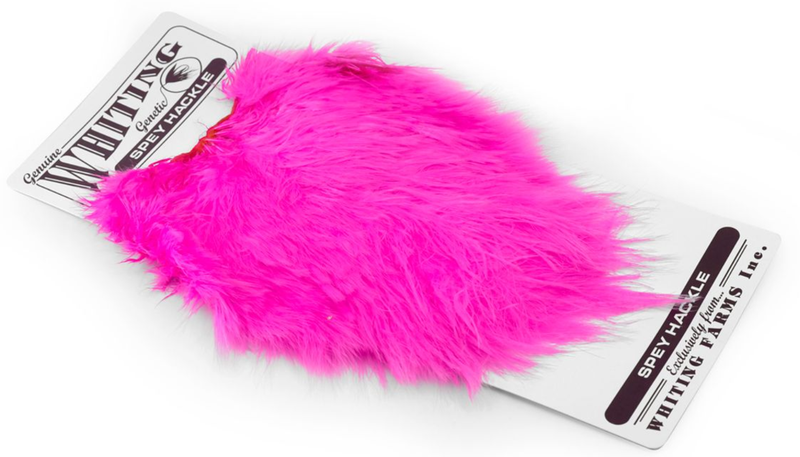 White dyed Pink
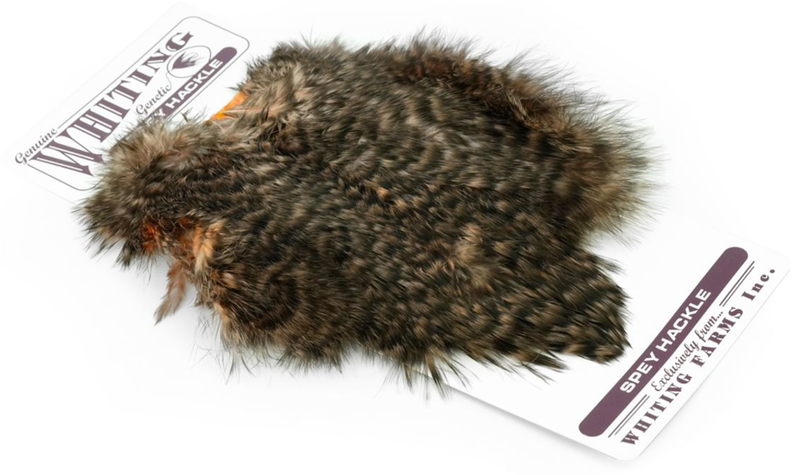 White dyed Salmon
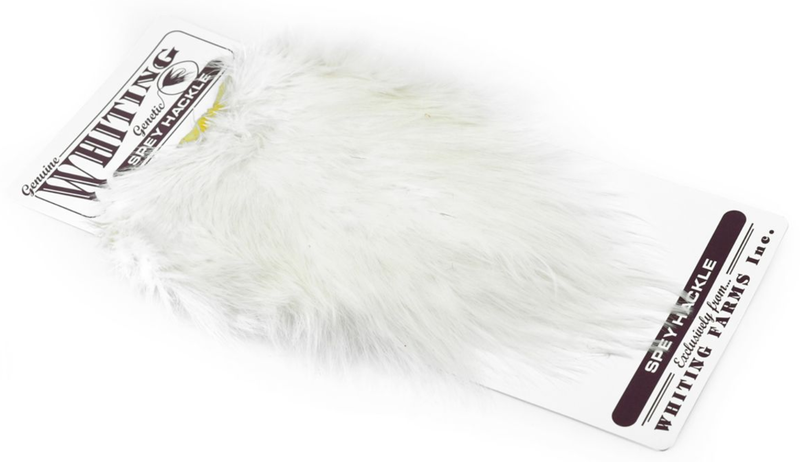 White
White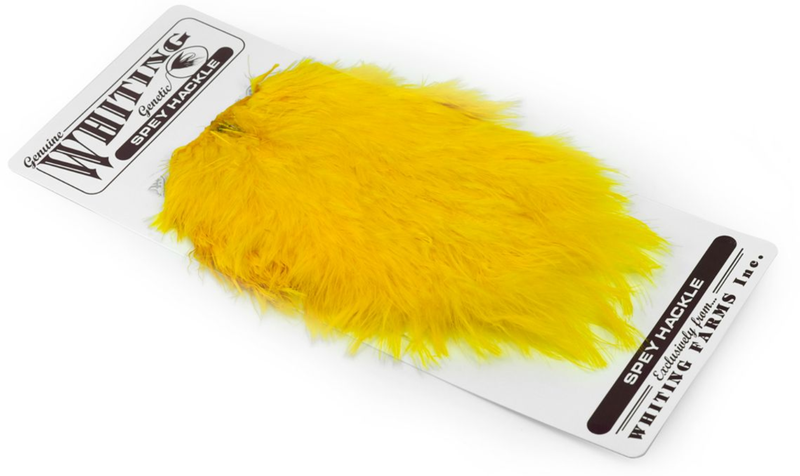 White dyed Yellow
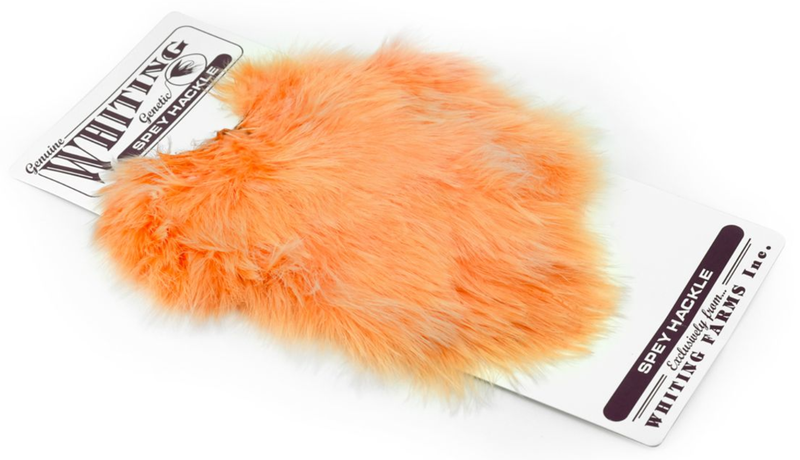 Grizzly dyed Salmon
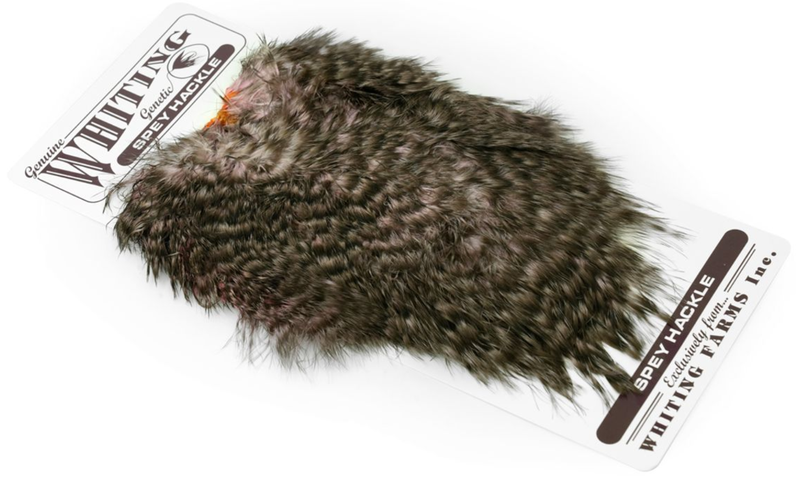 Grizzly dyed Shell Pink
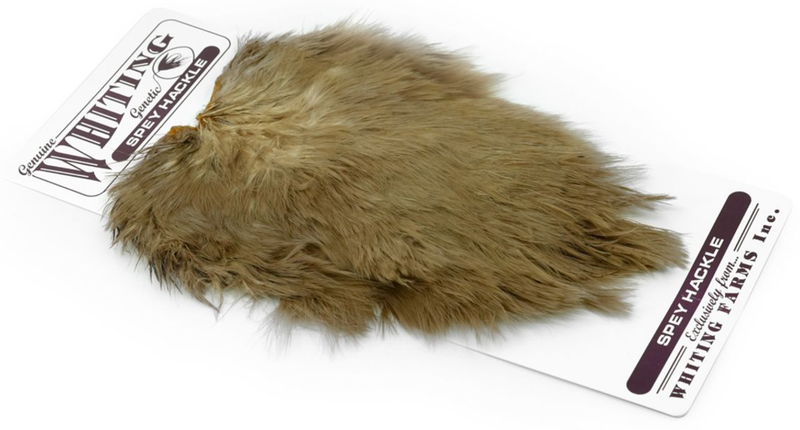 White dyed Tan
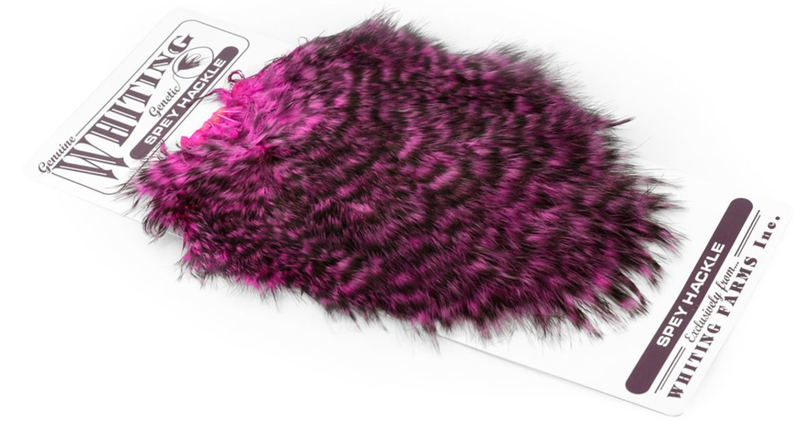 Grizzly dyed Pink
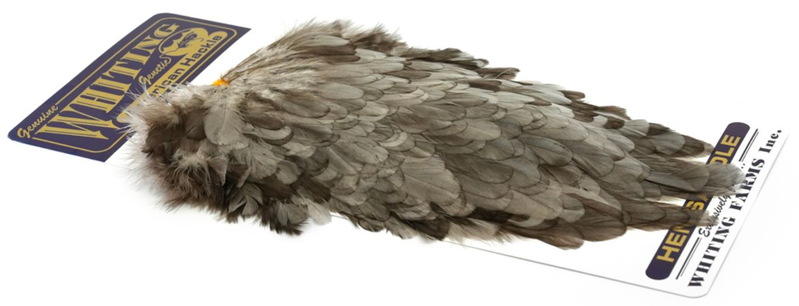 Medium Dun
Перья в этих седлах даже мягче, шире и содержат большее число бородок по сравнению с шейными. Из них получаются отличные воротники для мух в стиле "soft hackle".
Пожалуй, лучшие перья для вязания классических мокрых мушек.
These Whiting Farms Hen Saddles make fantastic wet fly feathers. These long narrow feathers are thinner in than the similar American Hen Saddle. They have fine, sturdy quills for less breakage while tying, and the barbs are sturdy enough to stand up in fast water.
A great feather for tying trout, salmon and steelhead streamers. They may also be burnt to create wings for dry flies.
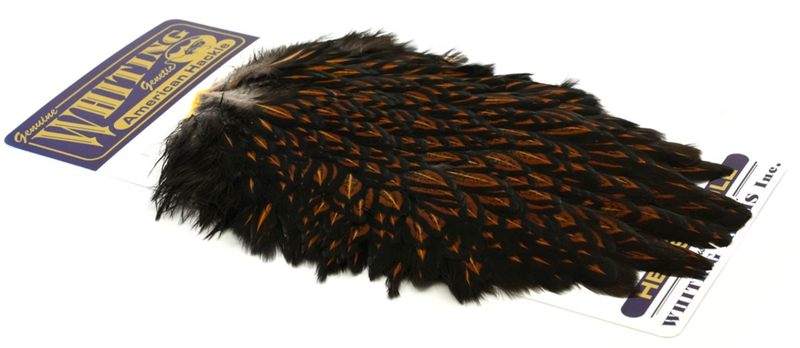 Black laced Brown
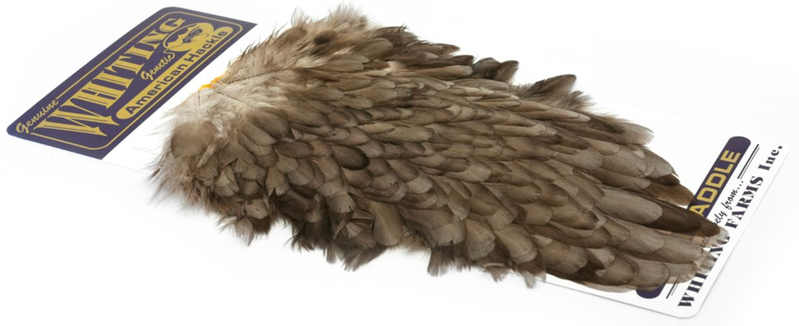 Dark Dun